


Digital marketing services are often discussed as individual capabilities like SEO, content, social media, email, video, and automation.
In practice, high-performing businesses don’t use them that way.
They treat digital marketing as a growth system, one where each service plays a defined role, reinforces the others, and compounds results over time.
This guide explains how digital marketing servicesactually work together, why isolated execution underperforms, and how founders, CMOs, and growth leaders should think about building a sustainable digital engine, without hype, jargon, or vendor bias.
Why Digital Marketing Must Be Viewed as a Business System
Most digital marketing failures don’t happen because a channel “doesn’t work.”
They happen because channels are deployed without alignment.
These are some common disconnects that happen in the industry:
- SEO is run separately from content.
- Paid media is executed without brand context.
- Social media is treated as output, not signal.
- Email runs in isolation from the buyer journey.
- Content that doesn’t match intent
- When Content becomes a number game
Consider a sole proprietor running a fast-growing quick-commerce business. His objective is simple and valid: increase organic reach to reduce dependency on paid channels.
He approaches digital agencies with the language he knows, SEO, blogs, and keywords.
The responses vary. Some agencies propose aggressive content calendars. Others talk about audits, intent mapping, and phased execution.
The business owner pushes back.
He has read enough blogs to believe one thing with confidence:
“Content is king. More content means more organic reach.” So, he asks for volume, more blogs, more pages, and more posts.
The agency, however, insists on slowing down.
They talk about search intent, existing visibility gaps, internal linking, technical foundations, distribution, and alignment.
From the owner’s perspective, this feels like hesitation. From the agency’s perspective, it’s restraint.
This is where the disconnect surfaces.
The owner is optimizing for output.
The agency is optimizing for outcomes.
Both want growth
They are just solving different problems
Publishing more content without addressing structure, intent, and amplification doesn’t build organic reach; it creates digital noise. At the same time, strategy without execution momentum feels abstract to a business owner under pressure.
The realization here is subtle but critical:
Organic growth is not a content problem. It’s a system problem.
Until content, SEO, brand clarity, and distribution are aligned, efforts increase, but momentum doesn’t.
The failure happened because digital marketing was being treated as a collection of activities instead of a connected system, where each channel has a role, a timing, and a dependency on the others.
This is the inflection point most growing businesses eventually hit.
They realise that execution alone doesn’t scale.
Alignment does.
And that’s where digital marketing needs to evolve, from doing things in parallel to designing them to work together.
From Channel Execution to Growth Orchestration
In early-stage marketing, individual tactics can move the needle.
At scale, they stop working unless they are designed to reinforce one another.
A system-led approach answers questions like:
- What role does each channel play in demand creation vs. demand capture?
- How does content created today support organic, social, and email tomorrow?
- How do insights from one channel improve performance across others?
This is why leading research platforms like Google, Ahrefs, and SEMrush consistently emphasize intent alignment, cross-channel consistency, and measurement maturity as core drivers of long-term growth, not tools or isolated tactics.
Digital Marketing as Revenue Infrastructure
Well-structured digital marketing behaves less like a campaign engine and more like infrastructure:
- It compounds rather than resets
- It reduces dependency on paid acquisition over time
- It builds trust before conversion is required
When designed as a system, digital marketing supports predictable growth, not reactive bursts of traffic.
The Architecture of an Integrated Digital Marketing Framework
At a systems level, digital marketing services fall into three functional layers:
Demand Creation
building awareness, trust, and relevance.
Demand Capture
converting existing intent into action.
Lifecycle Expansion
retaining, nurturing, and compounding value.
Each service contributes differently across these layers.
Demand Creation vs. Demand Capture
A common mistake is expecting every channel to do everything.
SEO primarily captures existing demand.
Content and video create new demand.
Social reinforces trust and recall.
Email and automation extend value over time.
When these roles are confused, performance plateaus.
Backlinko’s long-form studies on search behavior repeatedly show that users convert after multiple touchpoints, not during first exposure. An integrated framework is what makes those touchpoints coherent.
The Compounding Effect of Alignment
When services are aligned:
- SEO insights inform content topics
- Content fuels video and social distribution
- Video improves engagement signals and recall
- Email converts attention into relationships
- Automation scales consistency without losing context
This is where growth becomes exponential rather than linear.
SEO as a Foundational Demand Capture Layer
SEO is not just about rankings.
It’s about being present at the exact moment intent is expressed.
SEO’s Role in Sustainable Visibility and Trust
Search is often the final checkpoint before a decision is made.
Users search when they want clarity, validation, or solutions.
According to Google’s own documentation on search quality, pages that perform well:
- Demonstrate topical authority
- Match user intent precisely
- Are supported by consistent, high-quality content
SEO succeeds when it is supported by the broader system, not when it’s treated as a checklist.
Search Intent Across the Funnel (AEO-Friendly)
Users search differently at different stages:
- Informational queries → education and understanding
- Comparative queries → evaluation and validation
- Transactional queries → decision readiness
SEO works best when content, branding, and messaging already exist to support each stage.
How SEO Connects with Content, Brand Consulting, and Video
SEO identifies what people are asking.
Content and brand consulting define how the answers are framed. Video and distribution determine how widely those answers travel. Without this alignment, SEO traffic arrives but doesn’t convert.
Video and distribution determine how widely those answers travel.
Without this alignment, SEO traffic arrives but doesn’t convert.
Content as a Service (CaaS) as the Strategic Backbone
Content is not output.
It is infrastructure.
Businesses that treat content as a service, rather than a deliverable, build consistency, scalability, and authority over time.
Why Content Is an Operating Model, Not a One-Off Asset
High-performing digital ecosystems don’t rely on sporadic blog posts or isolated campaigns.
They run on:
- Defined narratives
- Repeatable formats
- Clear editorial intent
This is why platforms like Ahrefs and SEMrush emphasize topical coverage and content depth as ranking and trust signals.
Content Systems vs. Content Pieces
A system ensures:
- SEO pages don’t contradict brand messaging
- Social posts reinforce long-form content
- Email campaigns extend the lifespan of ideas
- Video content aligns with written narratives
Sub-Services Within Content as a Service
Content as a Service typically includes multiple layers working together
Brand Consulting
Strong content systems start with clarity, positioning, voice, and category context. Brand consulting ensures every piece of content reflects a consistent narrative, whether it appears on search, social, or owned platforms. Without this layer, teams produce more content but dilute meaning. This is where structured brand consulting services create alignment before scale.
Multilingual Content Marketing
As businesses expand across markets, translation alone is not enough. Multilingual content adapts messaging to cultural context, search behavior, and local intent while preserving the core brand narrative. This allows organic visibility and engagement to grow without fragmenting identity. A well-designed multilingual marketing strategy ensures reach scales without inconsistency.
Multi-Format Content Execution
Modern audiences consume information across formats, articles, videos, short-form visuals, and email. Multi-format execution ensures these assets are created as a connected set, not isolated outputs competing for attention. Written, visual, and motion content reinforce the same message at different touchpoints. This approach allows video creation and content execution to amplify, not replace, written content.
Video Marketing as a Growth and Acceleration Engine
Video has moved from optional to foundational.
It compresses trust-building into shorter timeframes and improves engagement across almost every digital touchpoint.
Why Video Sits at the Intersection of Brand and Performance
Google’s own studies on user behavior show that pages with strong engagement signals, time on page, interaction, retention, outperform those without.
Video improves
- Message clarity
- Recall
- Conversion confidence
End-to-End Video as a System
Effective video marketing is not just production.
It includes:
- Ideation aligned with business objectives
- Scriptwriting tied to content and SEO insights
- Execution across platforms
- Distribution through social, email, and owned channels
When integrated correctly, video amplifies every other digital marketing service.
Social Media Beyond Posting and Engagement
Likes and comments are surface signals.
The real value of social media lies in:
- Reinforcing brand consistency
- Increasing message familiarity
- Reducing perceived risk before conversion
From a systems perspective, social media functions as a trust amplifier rather than a primary acquisition engine.
Google’s own research into the modern buyer journey shows that users interact with multiple brand touchpoints before making decisions.
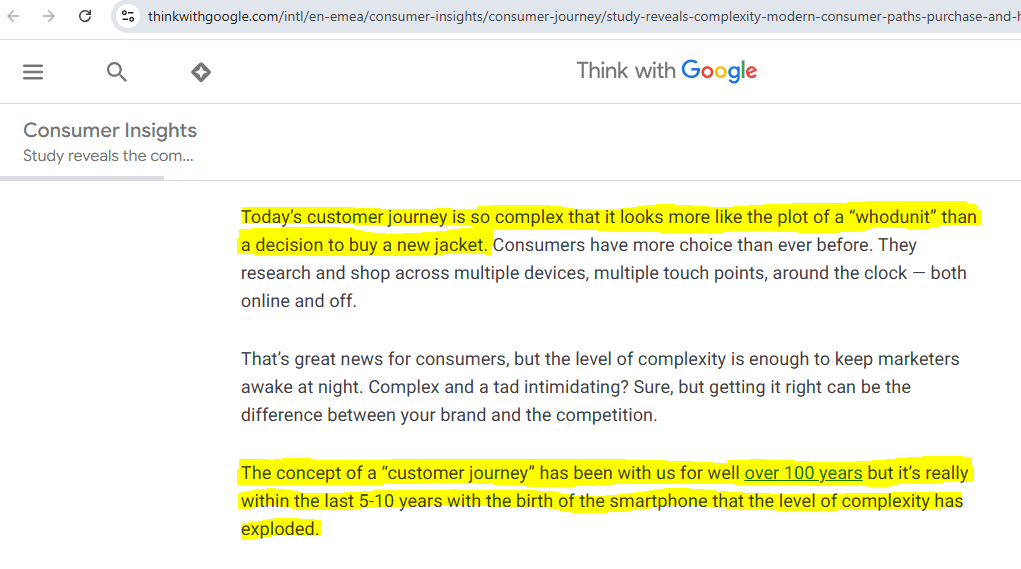
Social platforms quietly influence that journey by making brands feel present, active, and credible.
Email Marketing as a Lifecycle and Retention Engine
Email remains one of the few digital channels businesses truly own. That alone makes it strategically important.
But its real strength lies in what happens after the first conversion.
Email as an Owned Relationship Channel
Search and social help businesses get discovered.
Email helps them stay relevant.
Effective email marketing:
- Nurtures undecided prospects
- Educates users post-conversion
- Reinforces brand recall over time
According to data shared by platforms like Backlinko, retention-focused channels consistently outperform acquisition channels in long-term ROI, provided the messaging is timely and relevant.
Lifecycle Thinking, Not Broadcasts
Modern email systems are designed around behaviour, not blasts.
This includes:
- Onboarding sequences
- Education flows
- Re-engagement campaigns
When aligned with content and user intent, email becomes the connective tissue between awareness and loyalty.
Why Email Depends on Upstream Systems
Email does not fix unclear messaging.
It does not compensate for weak content.
It does not create intent where none exists.
Its effectiveness depends entirely on the quality of the ecosystem feeding into it.
Conversion Intelligence Embedded Across Digital Channels
Conversion optimisation is often misunderstood as a surface-level exercise, button colours, layouts, and minor tweaks.
In reality, conversion performance is shaped long before a user reaches a call-to-action.
Conversion as a System-Level Outcome
Users convert when:
- Messaging matches intent
- Friction is reduced across touchpoints
- Trust is established early
These factors are influenced by SEO clarity, content structure, brand voice, and distribution consistency, not just page design.
Experience Optimisation Across Touchpoints
Conversion intelligence shows up in:
- How content answers questions
- How video clarifies value
- How social reinforces legitimacy
- How email sustains confidence
Rather than being a standalone service, conversion thinking is embedded across the system, quietly improving outcomes everywhere.
Brand Consulting as a Unifying Growth Layer
As digital ecosystems grow, inconsistency becomes the hidden enemy.
Different teams, platforms, and formats start telling slightly different stories. Over time, this erodes trust, even when performance metrics look healthy.
Brand Consulting as Alignment, Not Decoration
Brand consulting focuses on:
- Positioning clarity
- Narrative consistency
- Category relevance
It ensures that every digital touchpoint speaks the same language, even when the format changes.
Why Brand Alignment Impacts Performance
When brand messaging is consistent:
- Content becomes more recognisable
- SEO pages convert more efficiently
- Social presence feels cohesive
- Video storytelling gains recall
This is why performance-driven platforms increasingly acknowledge brand strength as a conversion multiplier, not a creative luxury.
Marketing Automation as a Scale Enabler
Automation does not replace strategy.
It amplifies it.
Automation as Operational Discipline
Marketing automation brings structure to:
- Lead journeys
- Content delivery
- Cross-channel coordination
When used correctly, it reduces manual overhead while preserving message integrity.
The Dependency on Clean Inputs
Automation fails when:
- Content is unclear
- Segmentation is weak
- Objectives are undefined
In a mature system, automation supports consistency, not complexity.
How Digital Marketing Services Work Together Across the Funnel
Integrated systems become most visible when viewed through the funnel lens.
- Awareness is driven by content, video, and social presence
- Consideration is supported by SEO clarity and brand consistency
- Conversion is reinforced by experience, trust, and email
- Retention is sustained through lifecycle communication and automation
No single service owns the funnel. The system does.
Digital Marketing as Business Infrastructure
Digital marketing stops being unpredictable when it stops being fragmented.
When services are designed to work together:
- Effort compounds
- Trust accumulates
- Growth becomes sustainable
The most successful digital strategies are rarely the loudest. They are the most aligned.
They are the most aligned.
Frequently Asked Questions (FAQs)
Digital marketing services are designed to create visibility, capture intent, and build long-term demand through coordinated channels rather than isolated tactics.
No. Mature systems often evolve in phases, but they are designed with integration in mind from the start.
Because effort without alignment increases output, not outcomes. Systems create momentum; tactics create noise.
When insights from one channel improve performance in others, and growth compounds rather than resets, the system is functioning.



Social Media as a Trust and Distribution Layer
The hard truth is that social media marketing rarely creates demand on its own.
What it does exceptionally well is shape perception before demand is acted upon.
When a prospect encounters a brand through search, content, or referral, social platforms often become the place they go to validate credibility, sometimes without consciously realizing it.