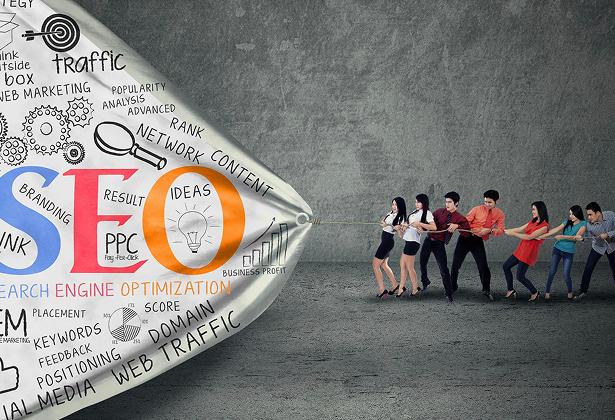

Why Businesses Are Confused About Search Today
Search marketing used to feel simple. Businesses invested in SEO, worked on rankings, and gradually built visibility. Today, that clarity has been replaced with confusion.
New terms appear in meetings and proposals, AEO, GEO, AI SEO, SXO, and businesses are left wondering whether traditional SEO still matters or if it has been replaced entirely. This confusion is especially common among companies speaking to a Digital Marketing Agency in Chennai , where both local competition and global exposure demand sharper search strategies.
The confusion doesn’t come from change itself; it comes from misunderstanding of change. Search engines have evolved. User behavior has evolved. Technology has evolved.
But the core goal of search has not changed: helping users find the most relevant, trustworthy answer to their query.
What has changed is how that answer is delivered, sometimes as a featured snippet, sometimes as a local result, sometimes through AI-generated summaries.
When businesses treat every new acronym as a separate strategy, they fragment their efforts and dilute results. The truth is simpler and more practical: SEO is still the foundation. Everything else builds on top of it.
How Search Has Changed (But Not Replaced SEO)
Search engines today behave less like directories and more like advisors. Google, Bing, and AI-driven search experiences aim to understand intent, context, and relevance rather than just matching keywords.
Users now ask complete questions, speak into devices, search locally, and expect immediate clarity.
This evolution created new optimisation needs:
Content must answer questions clearly
Local relevance must be stronger
Trust and credibility matter more
AI must assist analysis and execution
What it did not create is a reason to abandon SEO.
Instead, SEO expanded. It absorbed new requirements and execution methods. AEO, GEO, and AI SEO emerged to describe how SEO adapts to new behaviours, not to replace it.
What Is SEO? The Core System Behind All Search Visibility
SEO (Search Engine Optimization) is the process of making your website discoverable, understandable, and trustworthy for search engines and users.
In today’s context, SEO consists of four core pillars:
1. Technical Foundation
Search engines must be able to crawl, index, and understand your website. This includes:
- Clean site structure
- Page speed
- Mobile usability
- Proper indexing
2. Content and Intent Alignment
SEO today focuses on intent, not just keywords. Content must:
- Match what users are actually searching for
- Provide complete, clear answers
- Demonstrate subject understanding
3. Authority and Trust
Search engines evaluate credibility through:
- Content depth
- Consistency
- Brand signals
- References and mentions
4. User Experience
If users leave quickly or struggle to navigate, rankings suffer. SEO now includes:
- Readability
- Page flow
- Engagement signals
This is why modern SEO services are no longer limited to keyword placement. Businesses looking for structured, long-term visibility often rely on comprehensive SEO strategies that integrate technical performance, content, and user experience under one system.
What Is AEO (Answer Engine Optimization)?
AEO focuses on optimising content so it appears as direct answers in search results. These include:
Featured snippets
People Also Ask sections
Voice search responses
AI-generated summaries
How AEO Is Implemented
AEO is achieved by:
- Writing clear, direct answers to questions
- Structuring content logically
- Using simple language
- Formatting content for quick understanding
Is AEO Industry-Specific?
AEO works best for industries where users ask questions before making decisions:
- Healthcare
- Education
- SaaS
- Professional services
However, any business with informational search intent can benefit.
AEO’s Relationship with SEO
AEO cannot exist without SEO. Search engines choose answers from pages that already demonstrate authority, relevance, and technical clarity, core SEO signals.
What Is GEO? Understanding Geographic Optimization and Its Impact on Local SEO
Definition: GEO as Geographic Optimization
GEO, in its original and most widely used sense, stands for Geographic Optimization. It refers to the process of improving a business’s visibility in search results based on location-based intent.
When users include terms like “near me,” city names, or neighbourhood references, or when search engines infer location automatically, GEO determines which businesses appear and in what order.
Geographic Optimization is the backbone of Local SEO. It helps search engines understand where a business operates, who it serves, and which searches are relevant to that location.
How Geographic Optimization Is Implemented
Geographic Optimization is not limited to adding a city name to a page. It involves multiple layers working together:
Location-specific landing pages
Pages built for cities, regions, or service areas with unique, useful content.
Google Business Profile optimisation
Accurate business information, categories, services, images, and reviews.
Local content relevance
Content that reflects local context, problems, and search behaviour.
Consistent business signals
Matching name, address, and phone details across platforms.
User proximity and intent signals
Search engines use location data to personalise results in real time.
Together, these signals help search engines decide which business is most relevant for a specific location-based search.
Impact of Geographic Optimization on Local SEO
Local SEO cannot function without strong GEO signals. Geographic Optimization directly influences:
Local Pack visibility (map listings)
“Near me” searches
City-specific service searches
Mobile search results
For example, when someone searches for a service in Chennai, search engines prioritise businesses that clearly demonstrate geographic relevance, through content, listings, and engagement, not just keyword usage.
Without proper GEO implementation:
Businesses may rank nationally but not locally
Service pages fail to appear for city-level searches
Local competitors with weaker brands but better GEO win visibility
Is Geographic Optimization Industry-Specific?
Geographic Optimization is essential for:
Healthcare providers
Local services
Retail businesses
Educational institutions
Real estate and hospitality
However, it is not limited to local-only businesses . National and global brands also use GEO to dominate specific regions, cities, or markets. A company operating across India or internationally still needs strong geographic signals to perform well in regional searches.
How Geographic Optimization Fits Inside SEO
Geographic Optimization does not replace SEO.
It refines SEO for location-based intent.
SEO provides the foundation (crawlability, content quality, authority).
GEO adds where that relevance applies.
Without SEO, GEO has no stability.
Without GEO, SEO loses local precision.
GEO as Generative Engine Optimization: How AI Search Engines Interpret Content
Definition: GEO as Generative Engine Optimization
In newer search discussions, GEO is also used to mean Generative Engine Optimization. This refers to optimising content, so it is correctly understood, selected, and summarised by AI-driven search engines and generative answer systems.
Unlike Geographic Optimization, which focuses on where a user is, Generative Engine Optimization focuses on how machines interpret content.
How Generative Engine Optimization Works
Generative search engines don’t just rank pages, they:
- Read content in full
- Identify key ideas and relationships
- Summarise information into direct answers
- Combine insights from multiple trusted sources
Generative Engine Optimization helps ensure that:
- Content is accurate and unambiguous
- Ideas are clearly structured
- Context is easy for AI systems to interpret
- Information can be confidently reused in summaries
How Generative Engine Optimization Is Implemented
- Clear headings and logical flow
- Simple, direct explanations
- Strong topical depth instead of surface-level coverage
- Consistent terminology
- Content written for understanding, not manipulation
This approach overlaps heavily with AEO and AI-assisted SEO, but its focus is specifically on machine comprehension.
Is Generative Engine Optimization Industry-Specific?
Generative Engine Optimization is useful across all industries, but especially important for:
- Knowledge-driven businesses
- Healthcare and medical content
- SaaS and technology platforms
- Education and professional services
Any industry where AI-generated answers influence decision-making benefits from this optimisation.
How Generative Engine Optimization Fits Inside SEO
Generative Engine Optimization is not a replacement for SEO. It is an extension of modern SEO execution.
SEO ensures content is discoverable and trusted. Generative Engine Optimization ensures content is interpreted correctly by AI systems.
Without SEO authority, generative engines won’t trust the content. Without clear structure, they won’t use it accurately.
What Is AI SEO and How AI Is Reshaping Search Execution
AI SEO refers to using artificial intelligence to support SEO research, analysis, and execution.
How AI SEO Is Implemented
- Identifying content gaps
- Analysing search patterns
- Clustering topics logically
- Monitoring performance trends
What AI SEO Is Not
- It is not automated content publishing
- It does not replace human judgment
- It does not bypass SEO fundamentals
Industry Applicability
AI SEO benefits all industries, especially:
- Content-heavy businesses
- Competitive niches
- Multi-location brands
AI SEO’s Relationship with SEO
AI enhances SEO. It does not redefine it.
Other Search Acronyms Explained
SXO (Search Experience Optimization)
Improving how users interact with pages after clicking from search.
VSO (Voice Search Optimization)
Optimising content for conversational, spoken queries.
E-E-A-T
Experience, Expertise, Authority, and Trust signals that define credibility.
All of these function inside SEO, not outside it.
Industry-Wise Use of SEO, AEO, GEO, and AI SEO (A Quick Glance)
- Healthcare: SEO + AEO + GEO
- SaaS: SEO + AEO + AI SEO
- Local Services: SEO + GEO
- E-commerce: SEO + AI SEO
- Education: SEO + AEO
The strategy depends on intent, not trends.
Why SEO Is the Bigger Picture
SEO is the operating system.
AEO, GEO, and AI SEO are applications.
Without the operating system, applications fail.
Businesses that chase individual tactics often experience short-term spikes followed by long-term instability.
Businesses that invest in SEO as a system build authority, consistency, and sustained growth over time.
Frequently Asked Questions (FAQs)
Yes, SEO is still relevant, and in fact, more important than ever. AI-powered search tools do not generate information randomly. They rely heavily on existing, well-structured, and trustworthy content available on the web. SEO provides the signals AI systems use to understand which websites are credible, authoritative, and relevant. Without SEO, AI has no reliable source to pull information from. AI has changed how results are presented, not how trust is built.
No, AEO cannot work independently. Answer Engine Optimization depends on strong SEO foundations such as content relevance, page structure, authority, and technical clarity. Search engines select answers from pages they already trust. If SEO fundamentals are weak, content will not qualify to appear as a featured snippet, voice answer, or AI-generated response, no matter how well it is written.
No. While GEO is essential for local businesses, it is equally valuable for national and global brands. Large companies use GEO to dominate specific regions, cities, or service areas. For example, a national brand may want separate visibility in Chennai, Bengaluru, Dubai, or New York. GEO helps tailor search presence based on regional intent, language preferences, and local competition.
No. AI SEO supports SEO experts, it does not replace them. AI can analyse data, identify patterns, and speed up research, but it cannot understand business goals, brand positioning, customer psychology, or market nuance. Strategic thinking, decision-making, and long-term planning still require human expertise. AI is a tool, not a strategy.
SEO is a long-term growth process, not an instant solution. Initial improvements such as better indexing, keyword movement, or traffic signals may appear within a few weeks. However, stable rankings, authority growth, and consistent lead generation typically take several months. The timeline depends on competition, industry, content quality, and how strong the existing website foundation is.
Not all industries need AEO in the same way, but most benefit from it. Industries where customers ask questions before making decisions, such as healthcare, education, SaaS, and professional services, gain the most from AEO. For other industries, AEO still improves clarity and visibility by helping search engines understand content better. It should be applied selectively, not blindly.
AI-generated content is neither good nor bad by default. What matters is quality, accuracy, and usefulness. Content created purely to manipulate rankings or flood search engines usually fails. AI should assist in research, structuring, and drafting, but final content must be reviewed, refined, and aligned with real user intent. Search engines reward helpful content, regardless of how it is produced.
No. These are not standalone choices. SEO is the foundation, and AEO, GEO, and AI SEO are execution layers within it. Choosing only one approach limits results and creates gaps. For example, AEO without SEO lacks authority, and GEO without SEO lacks stability. A combined approach ensures consistency, scalability, and long-term performance.
No. Modern SEO is about outcomes, not just rankings. Traffic without relevance does not generate business value. SEO today focuses on attracting the right users, guiding them through content, and supporting conversions. Rankings are indicators, not the end goal. The real measure of SEO success is visibility that leads to engagement, trust, and business growth.
The biggest mistake is treating SEO as a one-time project instead of an ongoing system. Many businesses optimise a few pages and stop. Search behaviour, competition, and algorithms constantly evolve. SEO must be maintained, refined, and expanded over time. Businesses that invest consistently see compounding results; those that stop early lose momentum.
The right SEO strategy depends on the business model, industry, location, competition, and growth goals. There is no one-size-fits-all approach. A local service business needs stronger GEO focus, while a SaaS company may prioritise AEO and AI SEO. The key is to build on SEO fundamentals first, then layer advanced strategies based on real data and intent. Modern search is not about choosing between SEO, AEO, GEO, or AI SEO. It is about understanding how they work together. SEO remains the foundation that supports every evolution in search behaviour. Businesses that recognise this build visibility that lasts. Those that chase acronyms without structure struggle to sustain results.