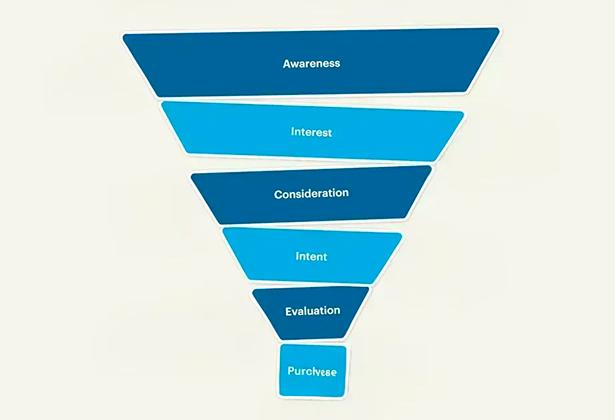

Metrics rise. Revenue moves only when the funnel aligns
Most digital marketing services promise growth, but very few are designed to deliver revenue. Traffic increases, leads come in, dashboards look busy, yet sales teams still struggle to connect marketing efforts to business outcomes.
The gap isn’t execution. It’s alignment.
In many organizations, awareness, demand generation, and conversion are treated as separate initiatives rather than a single revenue system.
SEO runs independently of paid media. Content exists without sales intent. Leads are generated without clarity on qualification or follow-through.
When this happens, marketing activity grows, but revenue impact stalls.
Digital marketing services only drive revenue when the funnel works as one connected engine. Awareness must be built with intent.
Demand must be structured to qualify, not just capture. Revenue must be measured as the outcome, not an afterthought.
Alignment is not a buzzword here; it is the operating model.
Why Do Most Digital Marketing Services Fail to Deliver Revenue?
Most digital marketing services fail to deliver revenue because they optimize activities, not outcomes. SEO teams focus on rankings, paid media teams focus on cost per lead, and content teams focus on engagement.
Each channel may perform well in isolation, but revenue lives in the connection between them, and that connection is often missing.
The failure is structural. When awareness, demand, and conversion are managed separately, no one owns the full customer journey.
Leads are generated without intent alignment, traffic grows without qualification, and marketing reports success while revenue remains flat.
The issue isn’t effort or tools; it’s the absence of a unified funnel strategy.
Revenue-focused marketing requires a shift from channel performance to funnel performance.
Digital marketing services must be designed to move prospects forward intentionally, rather than just increasing surface-level metrics.
How Should Awareness Marketing Support Revenue Growth?
Awareness marketing supports revenue growth only when it attracts the right audience with the right expectations.
Visibility alone does not create demand. If awareness content is disconnected from buyer intent, it generates traffic that consumes resources but does not convert.
Effective awareness marketing is mapped to intent signals. SEO content targets problem-aware and solution-aware searches.
Paid campaigns introduce value propositions that align with downstream offers. Messaging is consistent, so prospects understand not just who the brand is, but why it is relevant to their problem.
This approach ensures awareness is not a vanity stage but the first step in a revenue path.
When awareness is built with intent, it feeds demand generation instead of inflating bounce rates and disengaged traffic.
What Breaks Demand Generation in the Middle of the Funnel?
Demand generation breaks when leads are treated as outcomes instead of transitions. Many funnels collapse in the middle because the handoff between awareness and conversion is poorly defined.
Content attracts interest, ads capture leads, but neither prepares prospects for a buying decision.
Common breakdowns include mismatched messaging, weak qualification criteria, and lack of alignment between marketing and sales.
Leads may look good on paper but fail to progress because intent was never validated. This creates friction, wasted spend, and declining trust between teams.
Demand works when every interaction answers a specific question the buyer has at that stage. When digital marketing services are structured around this progression, leads become opportunities instead of liabilities.
How Do Digital Marketing Services Enable Revenue Alignment Across the Funnel?
Digital marketing services enable revenue alignment when they are built as a system rather than a collection of channels. Awareness, demand, and conversion share common goals, data, and accountability. Performance is measured by movement through the funnel, not isolated metrics.
This is where Ayatiworks Digital Marketing Services are structured differently. Services are aligned to funnel stages, intent mapping, and revenue contribution rather than standalone execution.
Digital marketing only becomes revenue-driven when it is viewed as a business system, not a collection of channels. Most marketing failures don’t happen because SEO, paid ads, or content “don’t work.” They happen because these channels are deployed without alignment, ownership, or a shared growth objective.
This system-level thinking is explained in depth in Why Digital Marketing Must Be Viewed as a Business System, where digital marketing services are framed as an integrated growth engine rather than isolated executions.
The framework outlines how awareness, demand, and revenue must operate together to create scalable, predictable outcomes, especially for modern businesses navigating fragmented buyer journeys.
When digital marketing services are designed using this integrated growth framework, alignment stops being theoretical and starts becoming operational.
How Can Businesses Evaluate Whether a Marketing Agency Is Revenue-Focused?
Businesses can evaluate whether a marketing agency is revenue-focused by examining how it defines success. Agencies that report only on traffic, leads, or engagement are optimizing activity. Revenue-focused agencies report on funnel movement, pipeline contribution, and conversion quality.
Key indicators include whether the agency connects channels to business goals, aligns marketing metrics with sales outcomes, and takes responsibility beyond lead generation. Transparency in reporting and clarity in strategy are stronger signals than tool stacks or tactical promises.
A revenue-focused agency does not sell services in isolation. It builds systems that align marketing execution with business growth.
From Funnel Alignment to Predictable, Scalable Growth
Funnel alignment turns digital marketing from a cost center into a growth driver. When awareness, demand, and revenue operate as one system, performance becomes predictable.
Marketing decisions are based on impact, not assumptions.
As search behavior evolves and AI-driven discovery reshapes visibility, fragmented marketing will continue to underperform.
Businesses that invest in aligned digital marketing services position themselves for scalable, sustainable growth, where every effort moves the needle forward.
Alignment is not an upgrade. It is the foundation.
Frequently Asked Questions (FAQs)
Funnel alignment means connecting awareness, demand generation, and conversion into one unified system focused on revenue outcomes.
Because traffic without intent targeting and proper funnel progression does not convert into qualified opportunities.
They impact revenue when strategies, channels, and metrics are aligned to move prospects through the funnel toward conversion.
Treating leads as final outcomes instead of qualifying and nurturing them toward sales readiness.
Revenue-focused agencies report on pipeline impact, conversion quality, and business outcomes-not just traffic or leads.
Yes. Even small businesses benefit from alignment because it reduces wasted spend and improves conversion efficiency.
It creates predictability, improves optimization decisions, and allows marketing performance to compound over time.